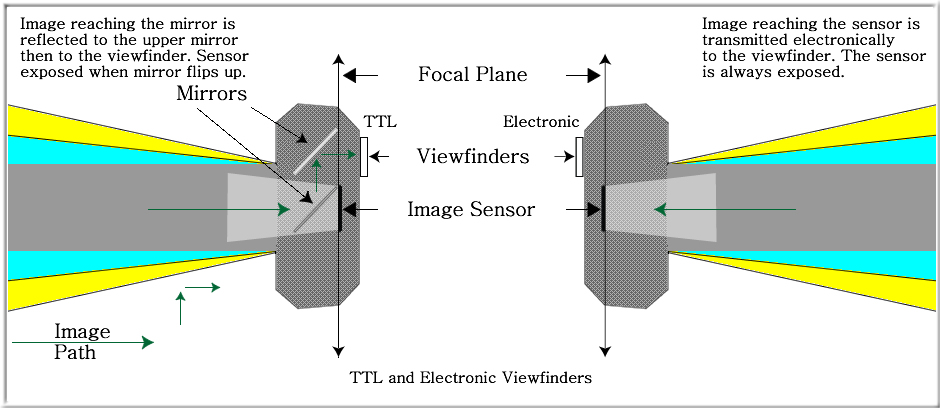
Viewfinder: The tiny screen inside the camera where you typically look to focus and shoot with the camera held up to your face. The two primary viewfinder types (at least the only two I can think of) are TTL and Electronic. They differ in how the image you see in the viewfinder gets there. Prior to mirrorless camera technology, DSLR cameras used TTL viewfinders. Mirrorless cameras employ electronic viewfinders for a couple of very good reasons. The lack of mirrors allows for a shallower body depth and fewer moving parts (cheaper construction), and, without the mirrors, there is no noise or vibration associated with the primary mirror flipping up out of the way of the imaging sensor and then slapping down into position again. This silent shooting is perfect for formal settings, such as weddings, and for maintaining a quiet environment around wildlife that might otherwise be alerted to your presence by the mirror noise.
TTL: Through The Lens-refers to how you view your subject in the viewfinder in real time. The TTL viewfinder receives the image you see by reflecting the "view' directly from the lens to the viewfinder via a pair of mirrors. While focusing on your subject, one of the mirrors is actually covering the imaging sensor. When you press the shutter release button to take the shot, the mirror flips up out of the way and allows the image you see to pass through to the imaging sensor. Then the mirror flips back down into place allowing you to see the subject again. As the image is taken, you cannot see the subject in the viewfinder because the first mirror is up and can no longer reflect the image to your viewfinder. Rapid firing sequences can appear like an old silent movie with brief dark periods between the normal images you see and want to shoot.
Electronic Viewfinder: Image projected electronically to a tiny screen in the viewfinder. Mirrorless cameras, and most point-and-shoot cameras, utilize the electronic viewfinder as they don't employ the reflecting mirror system. Electronic viewfinders generally lag far behind TTL types as the images you see are not in real-time due to processing and transmission of what you see via electrical means. As with most technology, that lag time is quickly shortening but is still noticeable in fast-moving action settings or when shooting long sequences of moving subjects..