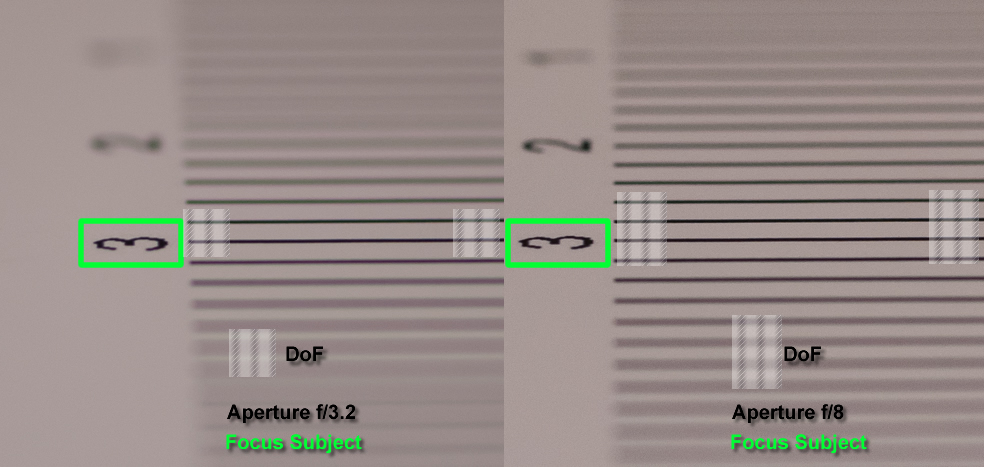
Depth of field: The "depth" of the area in acceptable focus; affected by aperture setting and distance from the camera's sensor. This aspect of photography is one of the simplest to demonstrate with a series of pictures. Now, these aren't award-winning photographs. They are simple photos used to demonstrate depth of field and how that is directly determined by aperture and distance from the subject. Two photos show the same distance from the subject but shot with two very different apertures. A similar change in the depth of field could be achieved without changing the aperture, zoom level, or lens, in the original f/3.2 photo by moving farther from the focus subject. While the size of the "3" would be smaller at that greater distance, the depth of field (area in acceptable focus) would increase. Your goal for the final image can determine which option you choose.
A "basic" calculation for depth of field used the lens focal length (100mm, 400mm, etc.) represented in the formula by (f), distance to the subject (u), the lens aperture or f/ number (N), and the acceptable circle of confusion (c). The approximate depth of field can be given by the formula: (2u^2Nc)/f^2. In English, that is (2 times the square of the distance to the subject, times the lens aperture setting, times the acceptable depth of field) all divided by the square of the lens focal length (100mm, 400mm, etc.) This brings up a seemingly new term: circle of confusion. But that is really just another way of saying the area of acceptable focus. Let's just accept that we aren't likely to run this calculation to get the picture we hope for while out in the field shooting a soaring eagle or a trumpeting bull elk!
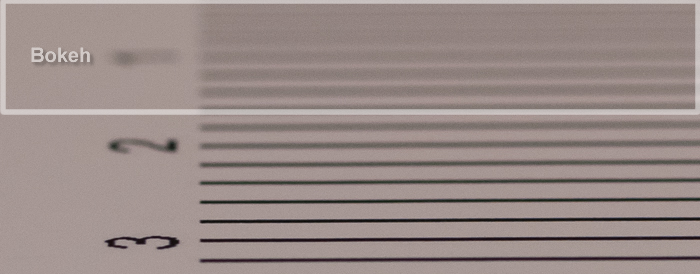
Bokeh: Out of focus area, typically behind the subject, that makes a sharply focused subject really stand out from the rest of the image. For this demonstration, we need better subjects. But I'll we'll first reuse part of the above image as an explanation. In this first image, the higlighted area is what would be considered the bokeh or the area out of focus that can provide a pleasing background to your subject of interest. The bokeh area removes distractions fom your subject and can give your subject an almost 3D quality.
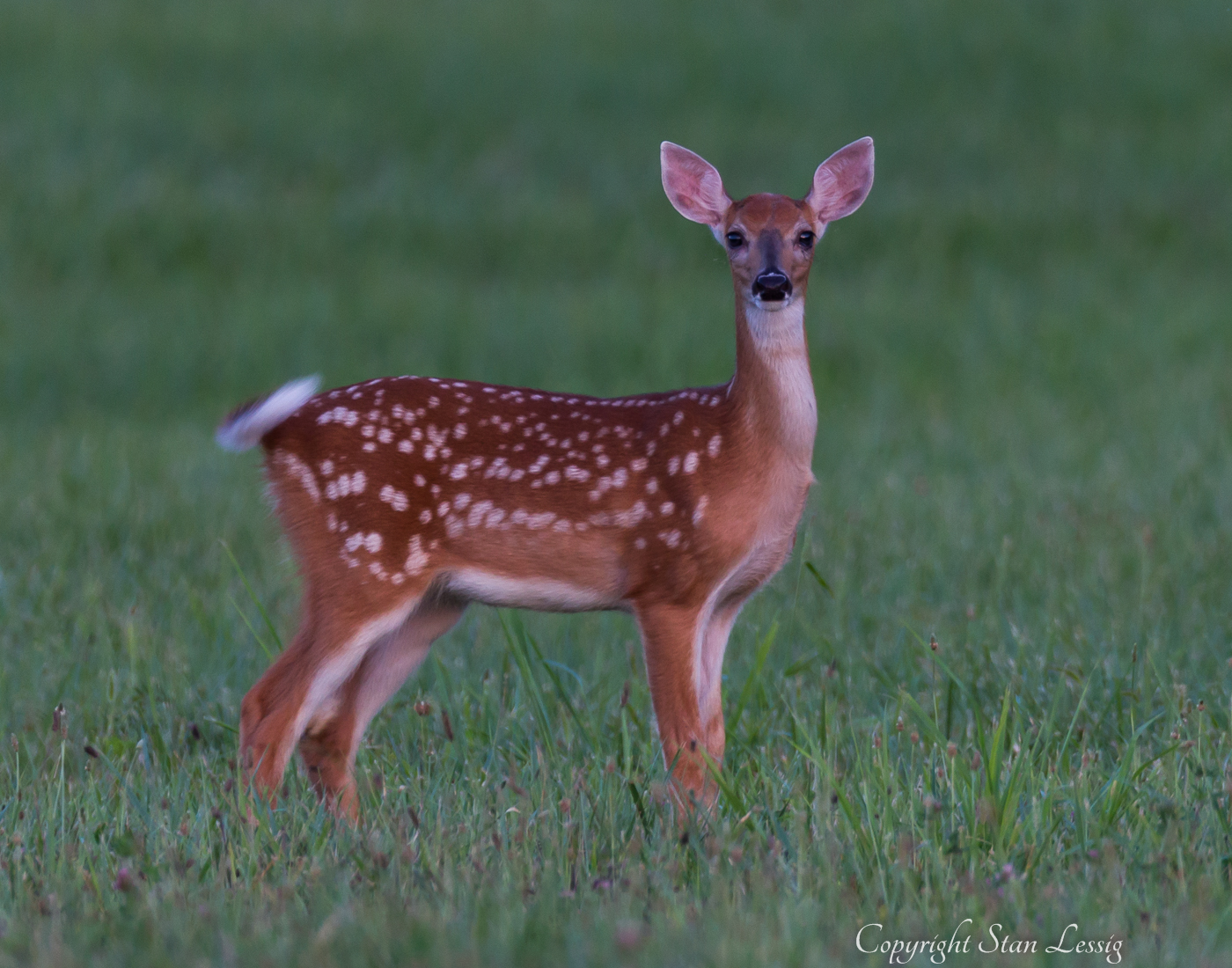
And now for the practical example of bokeh. The background behind the fawn is pleasantly out of focus and draws your attention to the head and ears. The closer the ground is to the deer, the more in focus it becomes and the more it distracts from the subject. A shallower depth of field, i.e.; going from f/6.3 down to f/2.8, would blur the background, and foreground, to a much greater degree as the depth of field would be shallower. However, that shallower depth of field could also force part of the main subject to be more out of focus as well.